

Are Cameras Allowed To Record People On Your Property In California
Are you lot taking also many pictures?
(Image credit:
Babycakes Romero
)
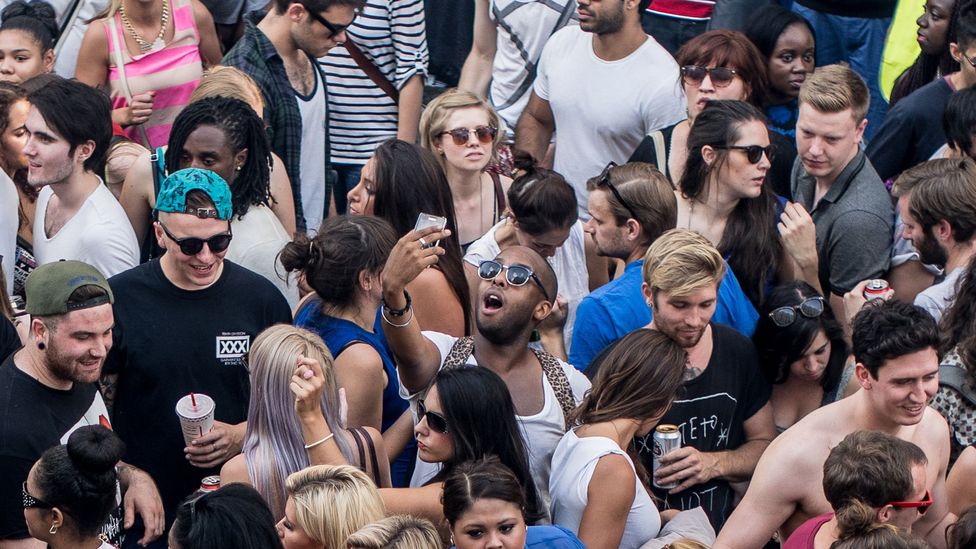
Snapping abroad on your smartphone or camera could be spoiling your memories of important events, enquiry suggests.
W
We've all done it at i time or another: whipped out our smartphone to snap a pic of a sunset that is too cute to forget, or surreptitiously photographed a specially impressive dish at a eating place.
It's obvious that we certificate our lives to keep our memories from fading, but with such widespread utilize of photographic camera phones and new devices like the Narrative Clip – a mini photographic camera that automatically takes a picture every 30 seconds – how much is likewise much? Are nosotros taking too many pictures?
If y'all look at recent inquiry by Linda Henkel, a psychology professor at Fairfield University, you might remember the respond is yes. Her research has suggested that taking photos can really impair your ability to recall details of the issue later on, despite – and likely because of – the effort spent taking excessive photographs.
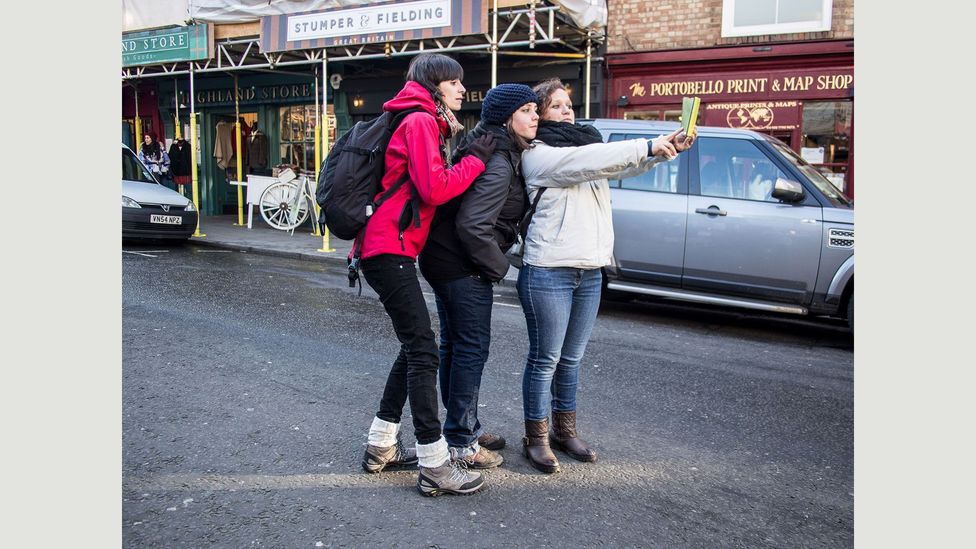
Taking too many pictures could have a detrimental event on how we make memories from what we run into (Credit: Babycakes Romero)
In her study from 2014, students were led on a museum tour and asked to take photos of sure works of art – and simply detect others. When they were tested the next twenty-four hour period, they were less able to recall details of objects that they had photographed. This is what Henkel calls a "photo-taking impairment outcome".
"What I think is going on is that we treat the camera as a sort of external retentiveness device," Henkel says. "We have this expectation that the camera is going to remember things for us, so we don't accept to continue processing that object and we don't engage in the types of things that would help united states of america remember information technology." Though she adds that fifty-fifty if by taking photos nosotros impair our memory in the short-term, having those photos in the first identify volition assist trigger u.s. to remember things later on down the line.
Interestingly, the impairment effect was diminished when students were asked to zoom in on a item aspect of an object, suggesting that the extra try and focus required to do so aids memory processes or that we our more likely to externalise our retentiveness when the photographic camera captures a wider scene.
"It makes sense because research consistently shows that divided attention is admittedly an enemy of memory," says Henkel.
Of course, we've felt the need to accept photos for decades, when almost every household in Western Europe and America owned a camera.
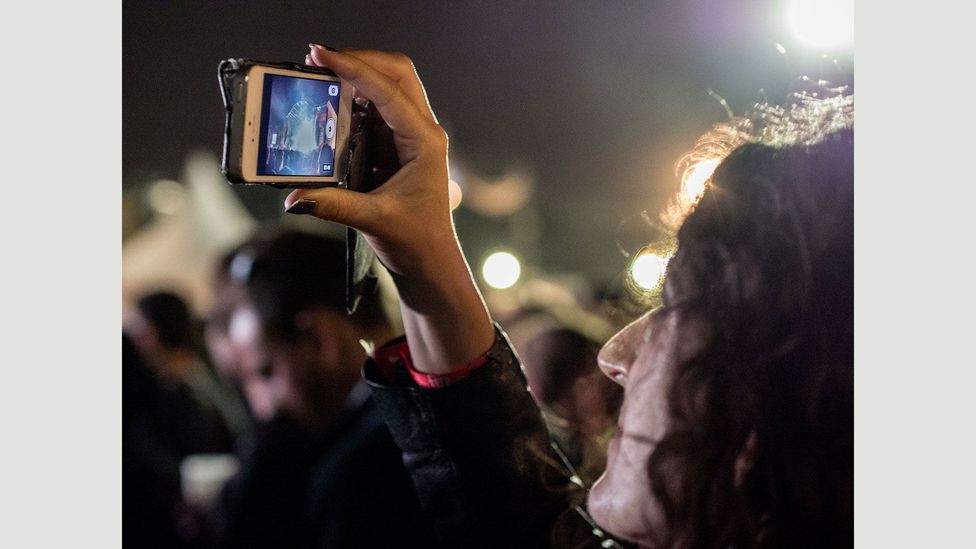
Look at something without taking a pic, and your brain may work harder to create a memory of it, research suggests (Credit: Babycakes Romero)
But the shift from film to digital has also changed why nosotros take photos and how nosotros employ them.
Research has confirmed what many of usa suspect – that the principal part of photography has shifted from commemorating special events and remembering family life, to a way of communicating to our peers, forming our own identity, and bolstering social bonds. While older adults adopting digital cameras tend to use them as retentiveness tools, younger generations tend to use the photos taken on them as a means of advice.
Logging our lives
"Many times people are taking photos – not to serve equally a later memory cue, but rather to say this is how I'm feeling correct here, right now," says Henkel. "Wait at Snapchat for example, users are taking those photos to communicate, rather than to remember."
Our ability to document hit a new high with the advent of Microsoft's SenseCam, an automatic vesture camera with a wide-angle lens, and as more than people participate in "life logging". Conceived as a type of "black box" recorder for humans and first released in 2003, the SenseCam can passively take pictures when it senses a person is in front of the camera or when there's a meaning change in calorie-free. Information technology can also exist fix to automatically snap a photo every 30 seconds.
Evangelos Niforatos, a researcher at Università della Svizzera Italiana, studies how new applied science can affect our power to brand memories. He's as well been actively life-logging for the concluding three years. Though research has shown life-logging using passive cameras tin be significantly beneficial for people who suffer from severe memory impairments and review their autobiographical photos periodically, Niforatos says that the biggest hurdle with life-logging for regular users is figuring out how to utilize all that information.
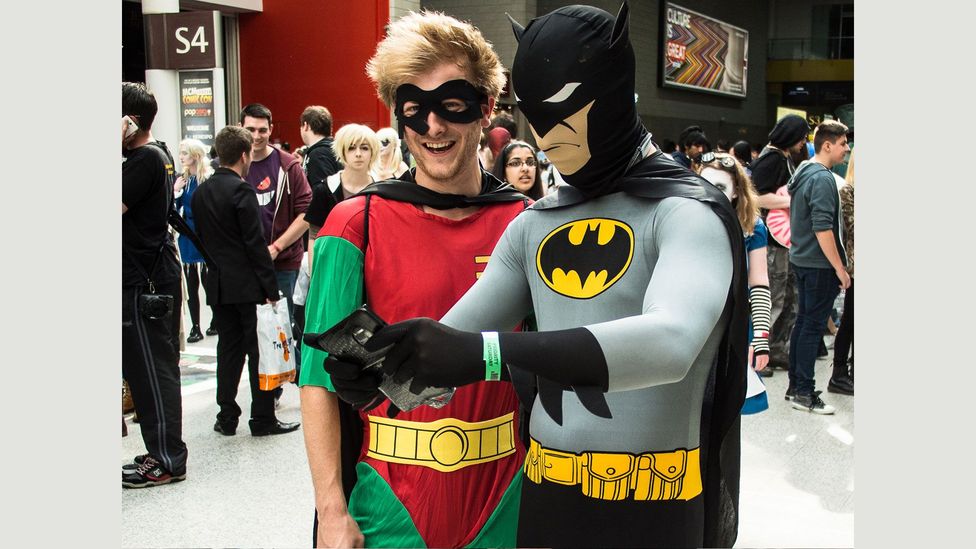
As photography has gone from film to digital, the reasons we have pictures take changed as well (Credit: Babycakes Romero)
"When it comes to an important feel to document, life-logging gadgets are definitely useful. But for everyday life, it's not quite there," he says. "But we're optimistic that we'll exist able to get it closer to your bodily retention – similar a prosthetic retention that will give you lot the right retentiveness cues to trigger what y'all want to remember."
Niforatos and his colleagues are designing a study that volition link heart charge per unit monitors from action trackers like the Fitbit to automated cameras, to encounter if changes in heart rate could indicate the best times to commencement snapping photos.
Digital cameras may not just have inverse the style nosotros accept pictures. We may have even inverse the manner we retrieve the experiences we record, thanks to social media.
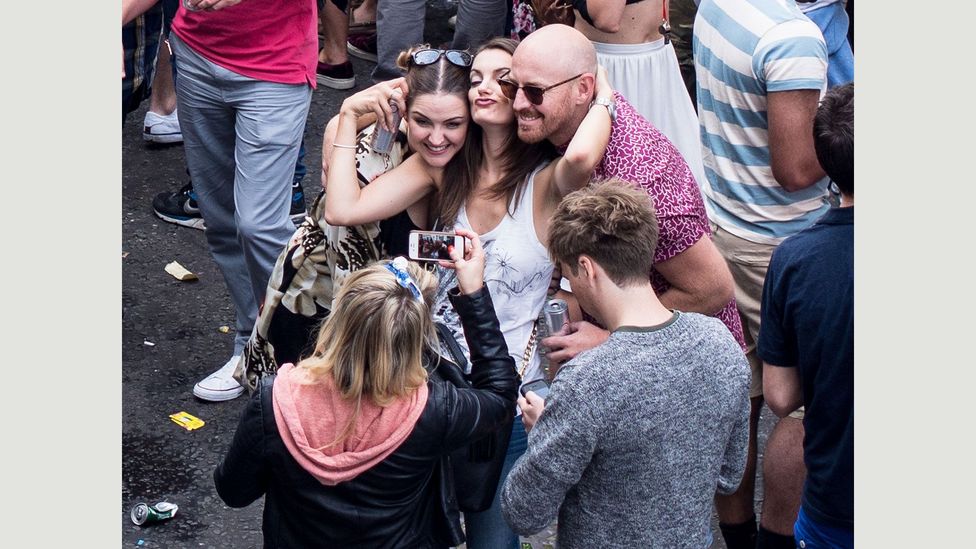
Are you taking photos to remember the moment - or to mark where you were and how you lot felt? (Credit: Babycakes Romero)
"We know memories are reconstructive. It'southward certainly possible that we are reconstructing our memories to make them more in line with photos that we are taking, or with photos that others accept and evidence to u.s.," says Kimberley Wade, an associate professor of psychology at the University of Warwick who studies false memories. "If someone shows you a photo that you didn't take, information technology may show part of an event that you were at, but you don't remember. And maybe that does get your retention. You may no longer know if the photo is something that you actually saw at the result."
And remembering things from an outside signal of view may have its drawbacks. Research has shown that when you remember an experience from a third-person perspective, you have less emotional connections to the memory.
But Niforitos for i argues that rather than distorting your memories, looking at photos that other people took at a shared upshot could ultimately enhance your retention of information technology.
"It depends on how you define experience. You lot could certainly fence that those shared experiences are your memories too," he says. "Information technology's possible to build a system that supports this type of collaborative co-experience."
Limit your snaps?
Similarly, though we are curating our memories by editing photos, that's not necessarily a bad thing.
"Most false memory experts would say that inaccuracy is a skillful thing for many reasons," says Wade. "If y'all change your political views at some point for instance, you lot might go dorsum and call back that your political views were more than in line with what they are now. We want to remember nosotros are stable people. We recollect our relationships in a better low-cal, we were think ourselves in a fashion that is more than in line with who we want to be. Some baloney is good for our well-beingness."
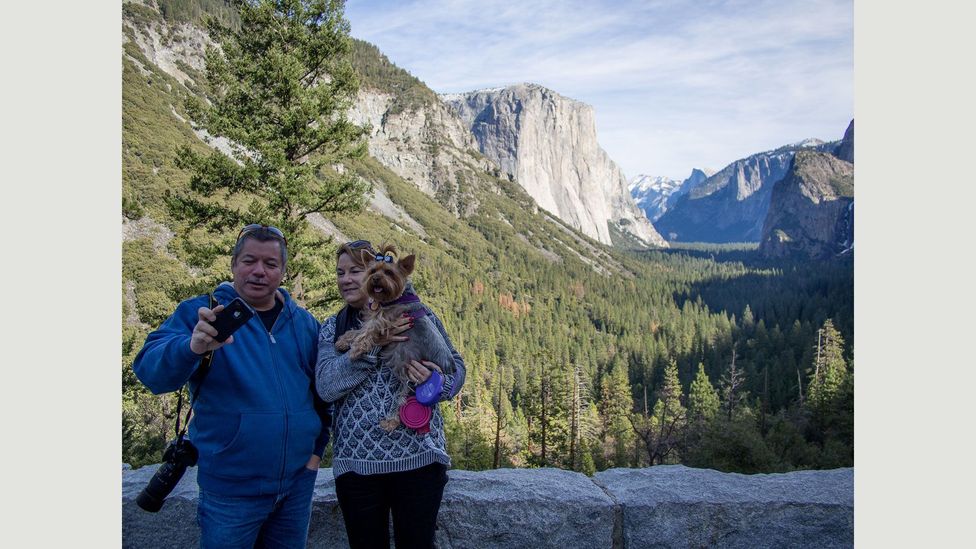
Putting the photographic camera downwardly and drinking in our surroundings could be skillful for us (Credit: Babycakes Romero)
So how often should we take photos? Unless y'all're a professional, Henkel suggests limiting the amount of photos you allow yourself to take and to be more selective in club to go more than of the benefits with fewer of the potential costs.
"If you lot're on vacation and enjoying some beautiful site, take a couple pictures and put the photographic camera away and enjoy the site, she says. "Later, go through them, organise them, print them out, and take the time to reminisce with other people. Those are all things that assist go on memories live."
Follow uson Facebook , Twitter , Google+ and LinkedIn

Source: https://www.bbc.com/future/article/20150901-are-you-taking-too-many-pictures
Posted by: rosafrover.blogspot.com
0 Response to "Are Cameras Allowed To Record People On Your Property In California"
Post a Comment